The three main types of lathe tooling are: cutting tools, turning tools, and boring tools.
Why Bar Pullers Are Essential in Lathe Tooling
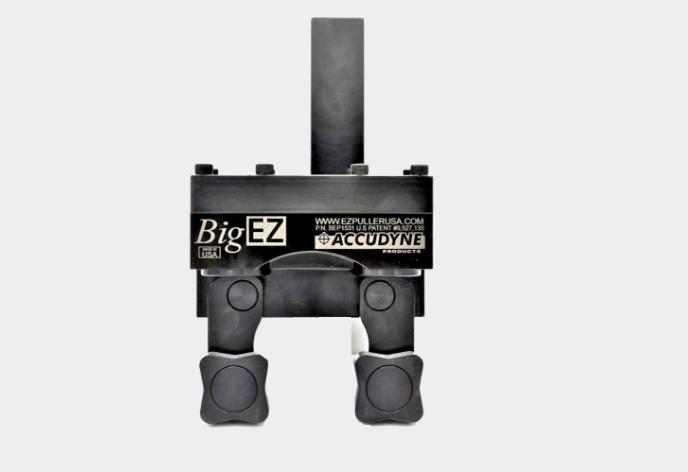
Unattended manufacturing is becoming more common in large and small facilities alike as producers aim to reduce lead times, save costs, and improve ergonomics for employees. In many CNC turning operations, loading and moving bar stock into position is a repetitive task that can be automated. This makes it possible to run the turning center with minimal oversight, which frees operators to manage higher-value or strictly manual tasks.
Bar feeders are a common option for moving bars into position in CNC turning centers; however, they aren’t the only choice. For many applications they aren’t the most efficient or cost-effective either.
Bar pullers are an alternative tool for partially or fully automating CNC turning procedures. As their name implies, bar pullers pull bar stock into a CNC machining center and position it for cutting and shaping. When the current portion is completed or cut from the bar, the puller moves into place, grips the bar, and pulls it forward again, and the process repeats over and over.
Not only do bar pullers support automation, they are also cost-effective and integrate with most CNC lathes. Accudyne designs and develops multiple bar puller options like our EZ-Puller, EZ-Puller Expanded, and BigEZ to meet the needs of different manufacturers.
Learn more about how a CNC lathe bar puller can complement turning operations, how they work, and the unique advantages they offer.
What Is Lathe Tooling?
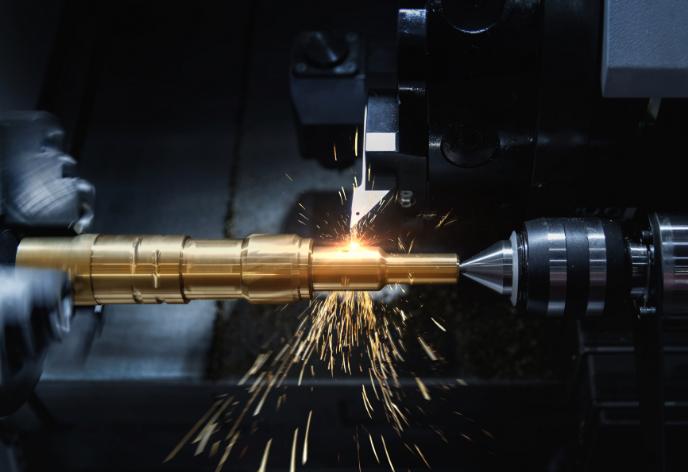
CNC lathes shape metal, wooden, plastic, or composite materials by pressing and moving fixed-position cutting tools onto rotating pieces of stock. This operation, called turning, is used to add threads or knurling, create sections with a smaller diameter, carve out conical or curved profiles, add tapped or bored features, or add symmetrical grooves on the workpiece. Because CNC lathes use precise computer-controlled instructions, they can produce a high volume of consistent, virtually identical parts. Some common applications of CNC lathe turning are:

Automotive Manufacturing

Producing Screws and Fasteners

Engine Parts

Electronics Components

Medical Device Components

Furniture Production
Types of CNC Lathe Tooling
- Lathe Cutting Tools
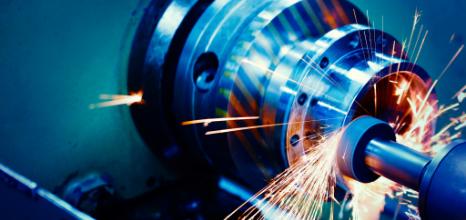
Lathe cutting tools are tough, strong tools made of hardened tool steel. They can cut through metal and other materials without becoming dull, and are usually designed for creating specific shapes, features, or profiles. Cutting tools can be made from a variety of materials, depending on what they will be used for and their anticipated service life.
Some common materials include:
- Steel Alloys. These alloys can contain carbon, chromium, and vanadium, and facilitate high-speed turning.
- Tungsten Carbide. This alloy is highly durable and can handle even faster turning speeds than steel tools.
- Diamond. Diamond-tipped or coated cutting tools are very tough but can be cost-prohibitive.
- Cubic Boron Nitride or Ceramic. These materials can operate at very fast cutting speeds and generate minimal heat, which eliminates the need for coolant systems.
- Lathe Turning Tools
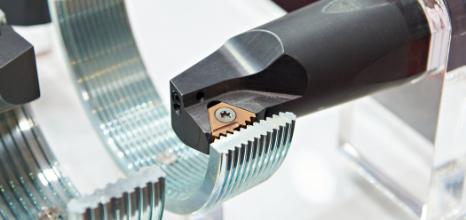
Lathe turning tools are generally used to remove sections of material to create smooth, cylindrical shapes. Rough turning tools are used to cut away larger, broad sections of material, while fine turning tools are designed for detail work and more intricate shaping.
- Lathe Boring Tools

After drills carve a hole into a workpiece, boring tools can widen or shape the hole to match project specifications. A boring tool is fixed to the toolpost and positioned at the hole, then the tool is used to widen the hole and create a precision internal surface finish.
Manual vs. Automatic Tooling
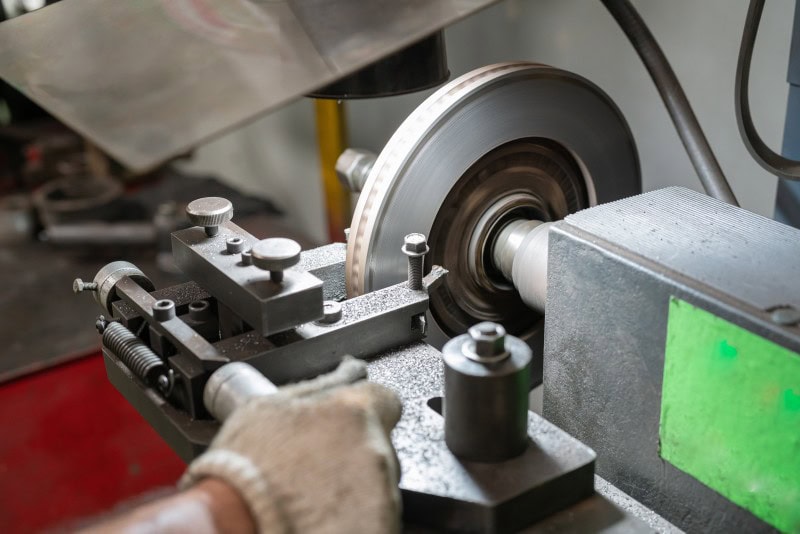
Both manual and automatic lathe processes have a role in modern manufacturing. Manual lathes, which the operator holds and applies to the bar, are reserved for simpler handmade products, custom crafting, or products like fine watches. Automated lathes, or CNC lathes, feature machine-controlled cutting tools that deliver high-precision results in high-volume applications across multiple industries.
Understanding Bar Pullers and Their Role
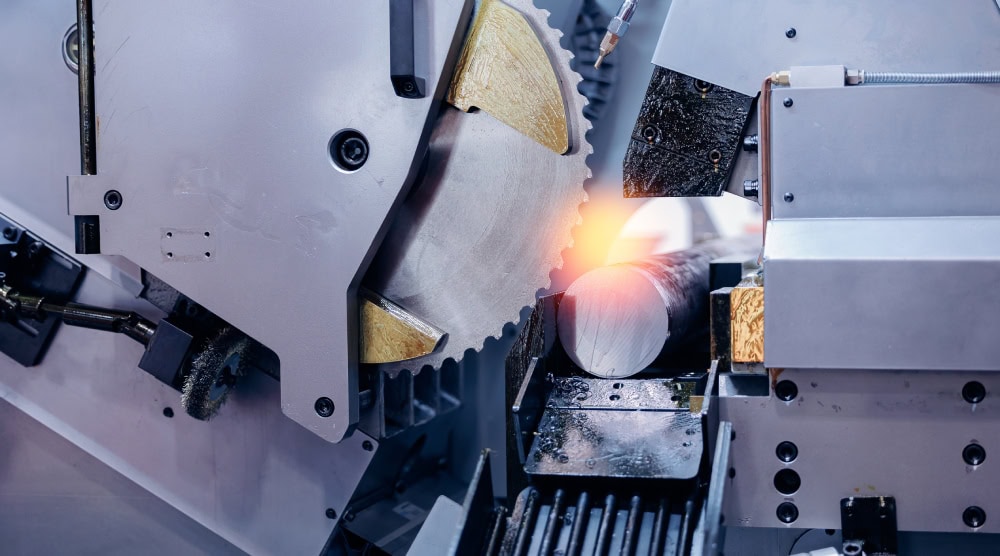
Lathe tools perform the various cutting, shaping, and boring tasks, but that’s only part of the turning process. For greater efficiency, CNC machining centers can be integrated with machinery that advances the bar stock into the machine and automatically positions the next section of the bar in the cutting area.
Bar pullers are a simple and cost-effective way to do this. They are also an important step toward untended machining that increases productivity and precision, while allowing operators to work on other projects or oversee multiple centers simultaneously.
Whereas bar feeders sit outside the machine center and load the machine, bar pullers mount to the lathe’s turret and move into position to grab and pull bar stock at the chuck face, pulling it forward again and again as each step is completed. The bar puller automatically moves the bar stock into the right position, eliminating the delays and human errors of manual intervention.
A bar puller also requires less space than a bar feeder, making automation accessible even in small work centers with compact machinery. Another advantage of bar pullers is that the lathe turret doesn’t have to become a stock stop, which can wear through the turret and cause damage over time.
Bar feeds are often expensive, high-maintenance, and physically unwieldy. In contrast, with a bar puller, you can make more use of your workspace and cut down on costs.
Bar Puller Features
Bar pullers automatically grab the front end of a piece of bar stock and pull it into position in the cutting area based on pre-programmed work instructions. This improves precision and enhances productivity for every part and order. The primary features of a bar puller are:

Gripping Mechanism
Grippers clamp onto the bar stock to move it forward. They are generally a caliper configuration, and are often available with adjustable jaws, steel fingers, or spring-loaded grippers that use tension to secure their grip.

Actuation Mechanism
The gripping mechanisms can be operated by mechanical, hydraulic, or pneumatic actuation.

Mounting and Integration
A CNC lathe bar puller mounts onto the lathe turret. From this position, it can integrate seamlessly into the machining center's cycles, automatically moving in and out of the area as it is needed.

Integration with CNC Controls
Bar pullers can be integrated with the CNC lathe control system. This capability coordinates when and how the puller moves into position, where and how it grips the bar, how far the bar is pulled, and when to release the bar and retract during turning.
How It Works
Bar pullers follow this process to assist CNC lathe operations:
1. After the shank is mounted in the turret, the adapter and gripper are screwed on.
2. The bar is fed through the back of the spindle, and the collet or chuck clamps it into position.
3. The CNC program has a parting off command, which faces off at least a ¼ in. projection.
4. The turret moves into position based on the program instructions and slides the gripper mechanism over the stock. The gripper adjusts to the diameter of the bar for a secure grip.
5. Once the bar stock is in position, the bar puller releases pressure, and then the turret retracts. The bar puller re-clamps onto the bar, and the turret retracts again to leave enough space between the gripper and bar.
6. The lathe completes the programmed machining sequence.
This process repeats until the entire bar is used.
The Benefits of Using Bar Pullers in CNC Machining
CNC bar pullers offer unique advantages over manual operations and CNC bar feeding tools. Consider these benefits of streamlined processes with Accudyne bar pullers:
Cost Savings
Bar pullers cost in the hundreds of dollars, making them a more affordable option than bar feeders. Bar pullers also take up far less floor space, and do not take away from space for neighboring machinery or the flow of foot traffic. They are a great automation solution for small work environments or larger settings too.
As automation tools, they offer benefits for workflow, ergonomics, and precision capabilities as well. Operators can prioritize more complex or profitable tasks, oversee additional centers, or focus on intricate manual work instead of manually feeding bars into the machining center This can reduce costs associated with labor, fatigue-related errors, or repetitive movement injuries.

Simple Setup and Operation
Accudyne develops user-friendly bar pullers that are highly reliable and effective. Our EZ Bar Puller has a one-time easy setup and doesn’t require ongoing mechanical adjustments to do work. The CNC program tells the bar puller how to adjust the X-axis endpoints for bar stock of different diameters without human intervention. By limiting manual intervention strictly to advancing the bar, you can more efficiently manage work at a fixed location or even across different jobs and workstations.

Versatility and Efficiency
Bar pullers can accommodate changing bar sizes with less material waste and far fewer delays than manual operations. Instead of gripping fingers that can break and require manual adjustment, our EZ Puller products feature versatile gripping mechanisms that can handle bars in these ranges without spindle orientation:
- Round: 0.9 in. – 1.750 in.
- Hex: 0.125 in. – 1.375 in.
- Square: 0.125 in. – 1.000 in.

Safety
Bar pullers significantly reduce manual tasks. This keeps workers safer by reducing their interactions with potentially dangerous machines, moving equipment, or sharp blades and material edges. Stress from repetitive motions is also reduced, for more ergonomic work. All of this contributes to cost savings over time.

Contact Accudyne Products for Bar Pullers for Use with Lathe Tooling
Accudyne Products designs and manufactures high-performance bar pullers that offer automation without the costs or space demands associated with bar feeders. We work hard to develop cutting-edge solutions and tools that optimize your CNC turning and machining processes.
With our EZ Bar Puller equipment, you can automate more of your operations, protect your staff, and complete small and large orders faster. Our bar pullers are long-lasting tools that are easy to use and maintain. We also provide grippers, springs, replacement parts, and more.
Contact us today to learn more, or explore our online store to see the options available.